Builder Files · The Crew
Zeke Clark: The Guy Who Kept Eddie Van Halen's Rig Alive
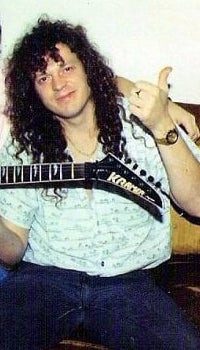
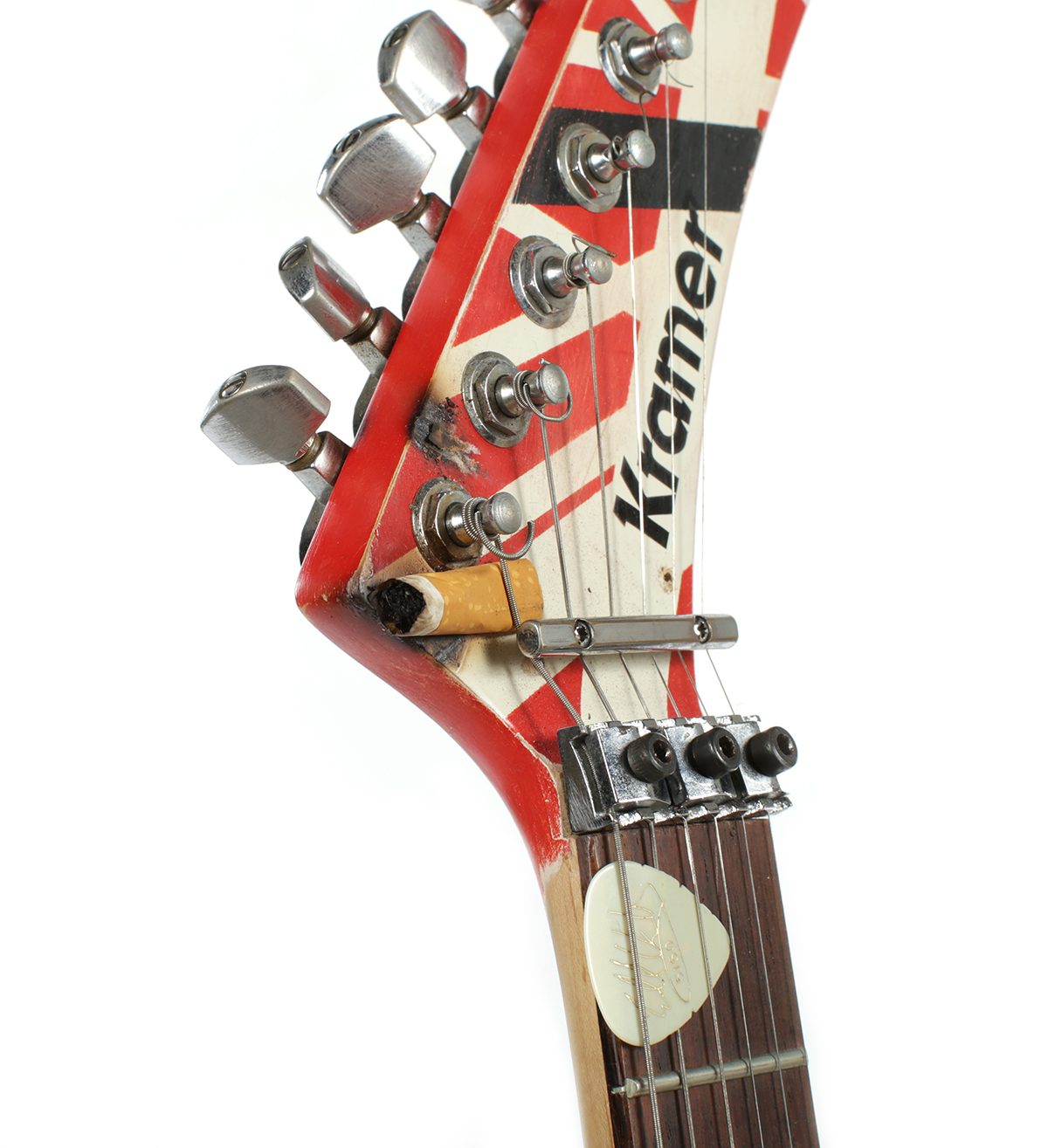
There is a cigarette butt wedged under the strings of one of Eddie Van Halen's studio guitars, and a burn mark scorched into the edge of the headstock where another one sat too long. Randall "Zeke" Clark built it, kept it running, and kept it. For about nine years he was the person responsible for making sure Eddie Van Halen's guitars, amplifiers and rack system worked.
Why this name is worth knowing
Almost everybody who cares about electric guitars knows what Eddie Van Halen played. Far fewer could name the person who kept it working: the one who chose the replacement speakers, soldered them into the cabinets, made the wiring inside the rack by hand and got the whole system onto a stage every night for the better part of a decade.
Zeke Clark did that job from roughly 1985 to 1993, across the 5150, OU812 and For Unlawful Carnal Knowledge album and touring cycles. He built two guitars Eddie kept and used. He later worked for Prince and, from 2010, for Kenny Chesney.
His name surfaced again in 2026 because he put his collection up for auction. That is what prompted this piece, but the sale is not the story. The career behind the objects is.
Early 1970s
Detroit to San Francisco
Clark grew up in Detroit and moved to San Francisco to work for Bill Graham Presents.
Through the mid-1970s, BGP was the most powerful concert promoter in America: Winterland, the Fillmore, the Day on the Green shows at the Oakland Coliseum. Working for Graham meant working the largest productions in the country, continuously.
The acts named in Clark's history read like a run of bills from that period: Crosby, Stills, Nash & Young, the Grateful Dead, Jefferson Airplane, Journey. It is worth being precise about what that means. A promoter's crew works the show, not the band, so this is not a claim that he was any of those bands' guitar tech. It is something more useful for understanding how he ended up at 5150: years of stage builds, load-ins, backline and on-the-spot repair across every kind of act, at a volume almost nobody else was getting.
That is where the trade came from. By the time he moved south to Los Angeles, he had spent roughly a decade around touring production at its highest level.
1985
Joining Van Halen
Clark joined Eddie's crew around 1985, replacing longtime guitar tech Rudy Leiren.
He arrived at a turning point. David Lee Roth was out, Sammy Hagar was in, and Eddie was building what became 5150 inside his home studio. The guitar setup was getting more complicated, not less.
The job was never just changing strings backstage. Clark worked on the guitars, the amplifiers, the speaker cabinets, the wiring and the rack equipment Eddie used in the studio and on tour.
1986
Building a guitar as a test
By Clark's account, Eddie asked him to build a guitar, a way of finding out whether his new tech could do more than basic repair work.
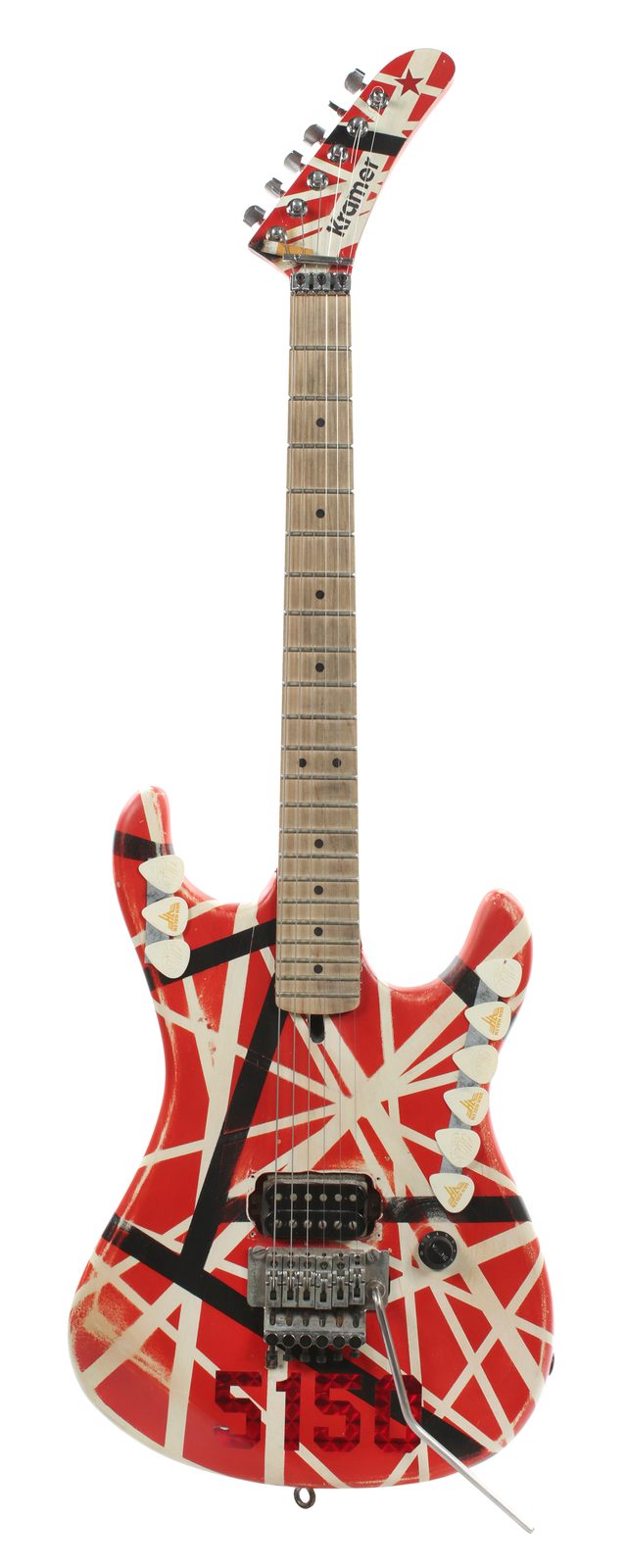
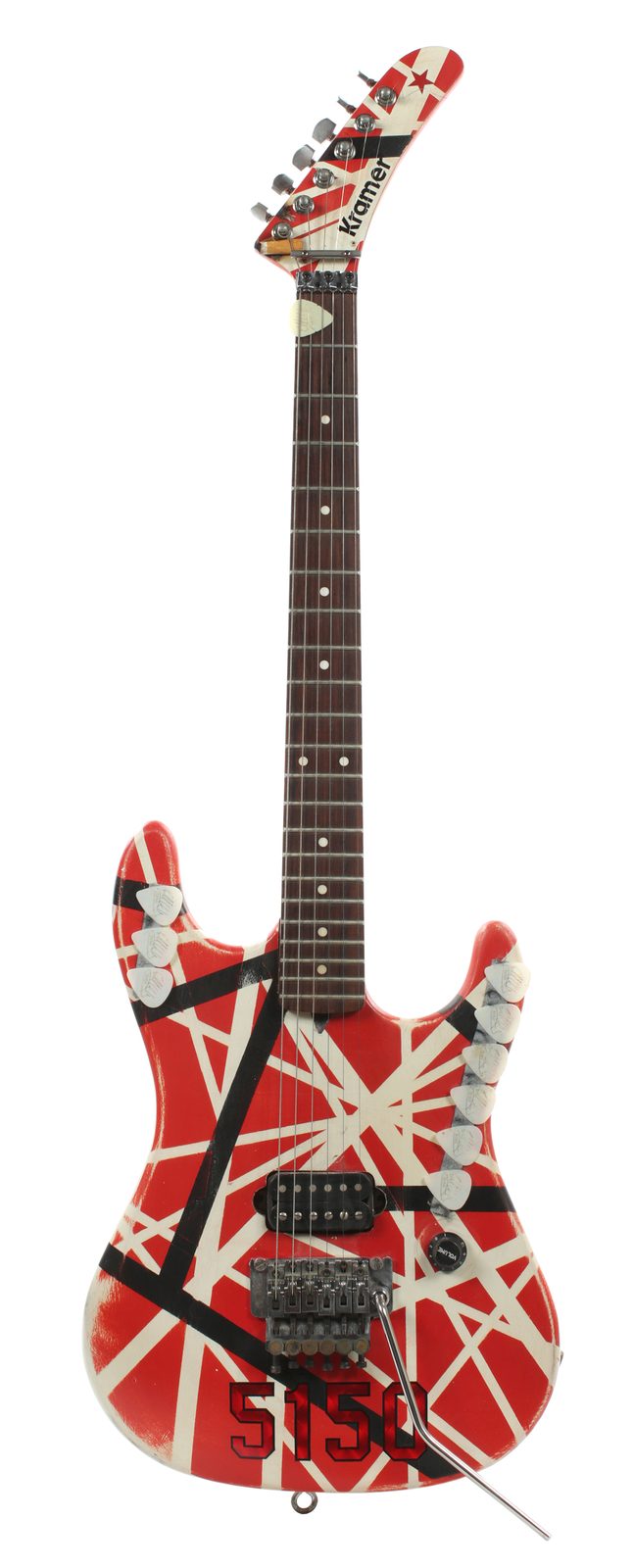
The result was a striped 5150-style Kramer, built in 1986, with the familiar single bridge humbucker, Floyd Rose tremolo and stripped-down layout Eddie preferred. It stayed around 5150 Studio and became one of his working instruments.
Clark was also interviewed at the studio by guitar journalist Steve Rosen on 10 May 1986, which independently places him inside Eddie's operation at the height of the 5150 period.
1986 · On the road
The 5150 tour
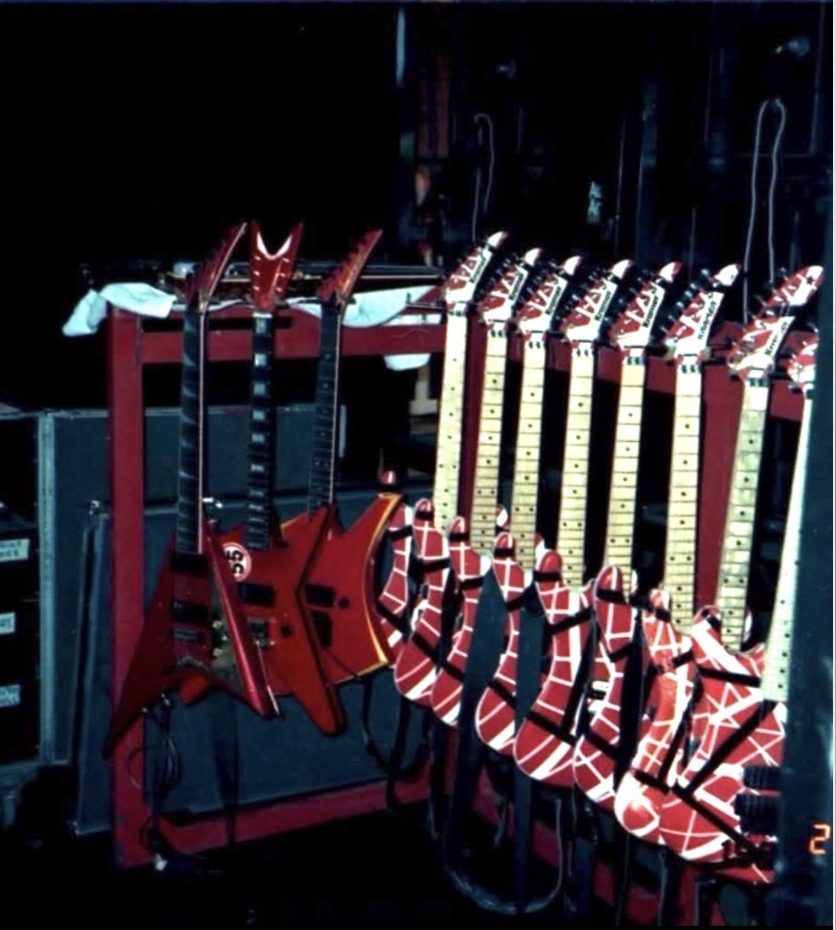
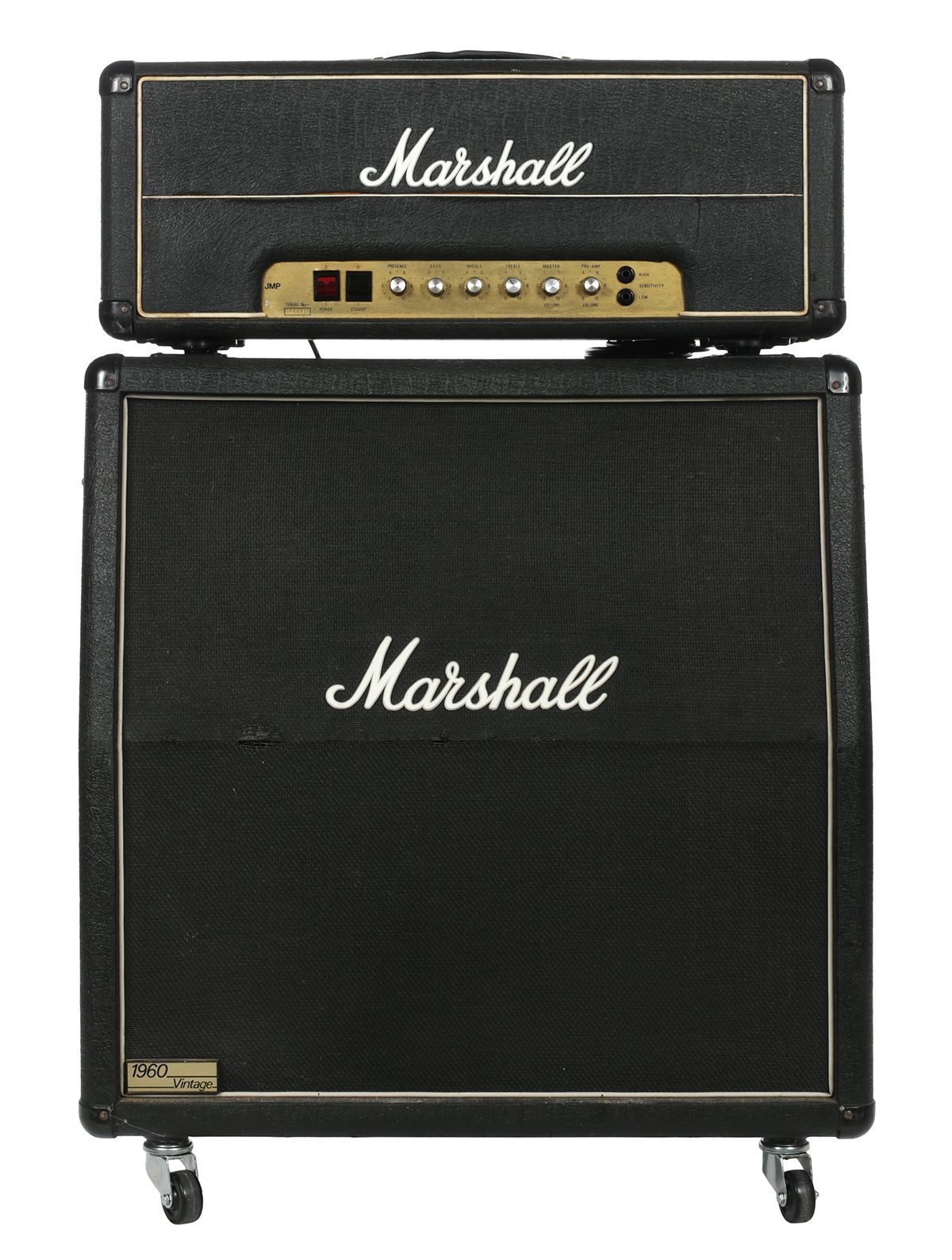
Clark served as Eddie's lead guitar and amplifier technician for the 5150 tour. The rig involved Kramer guitars, Steinbergers, vintage Marshall heads, cabinets and a custom rack system. Any one of them could take a show down.
He worked alongside amp technician Jose Arredondo, whose modified Marshalls were already central to Eddie's sound. Clark has said he selected the replacement Celestion speakers, wired the cabinets and soldered the speakers into place himself.
1987
A second one
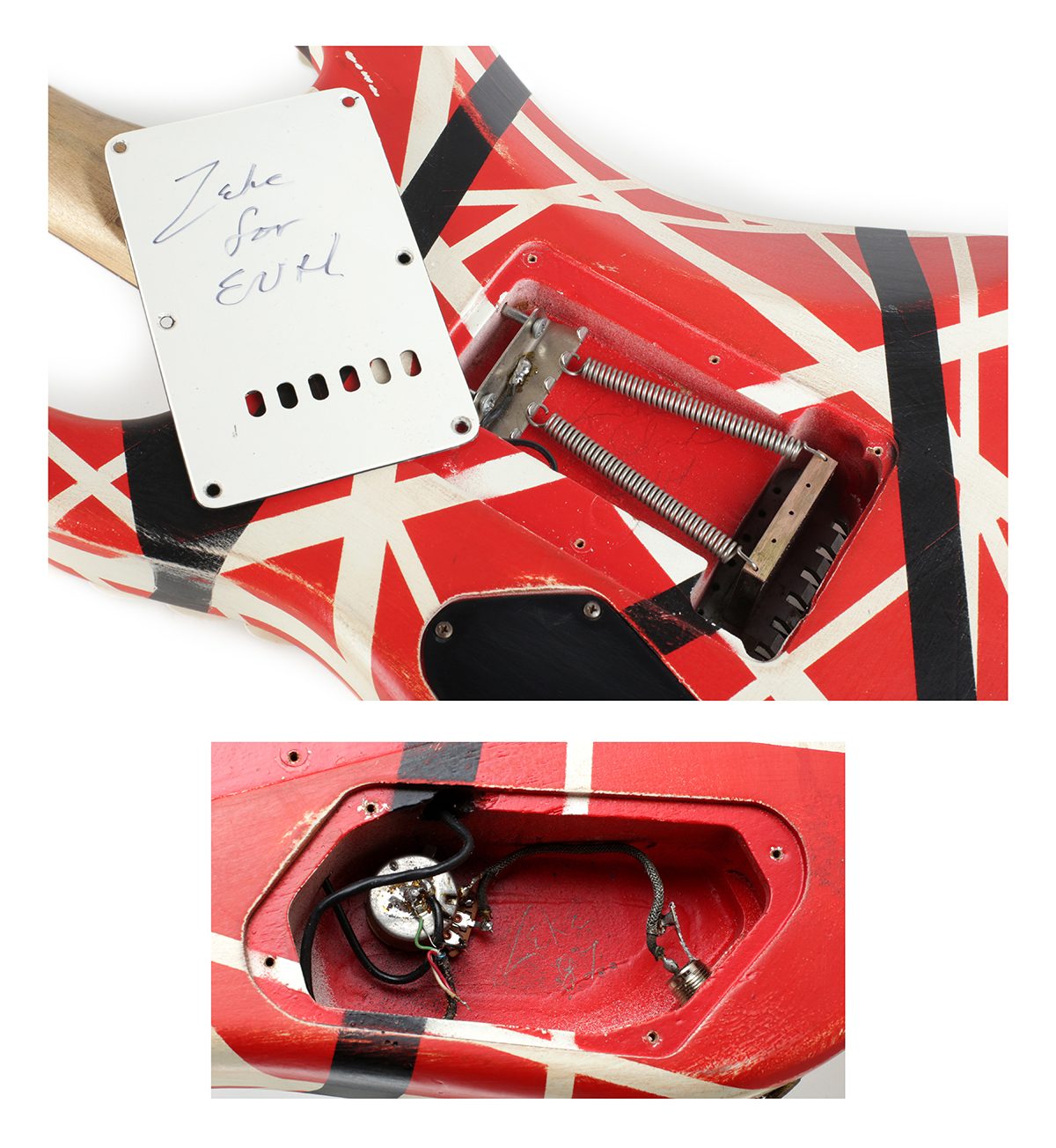
Clark built another striped Kramer for Eddie in 1987. Like the first, it was made as a serious working instrument rather than a display piece: one humbucker, a Floyd Rose, the same stripped-down approach.
The neck plate is stamped EV5150. The finish is worn through to bare wood along the forearm contour and the lower edge, in the places hands and belt buckles put it there.
The evidence
What a working guitar looks like
There are cigarette burns on the headstock. There are picks tucked into the body edges and under the strings. There is an old cigarette butt still sitting between the strings and the nut, where it was parked and never removed.
None of this was staged for a sale. It is what an instrument looks like after it has sat in a working studio with Eddie Van Halen, which is exactly what happened to it.
It is also the honest limit of what can be claimed. Neither Clark nor the auction house can say which recordings these guitars were used on. They are heavily used 5150 Studio guitars. No more, and no less.
1987–1989
The OU812 years, and the rack
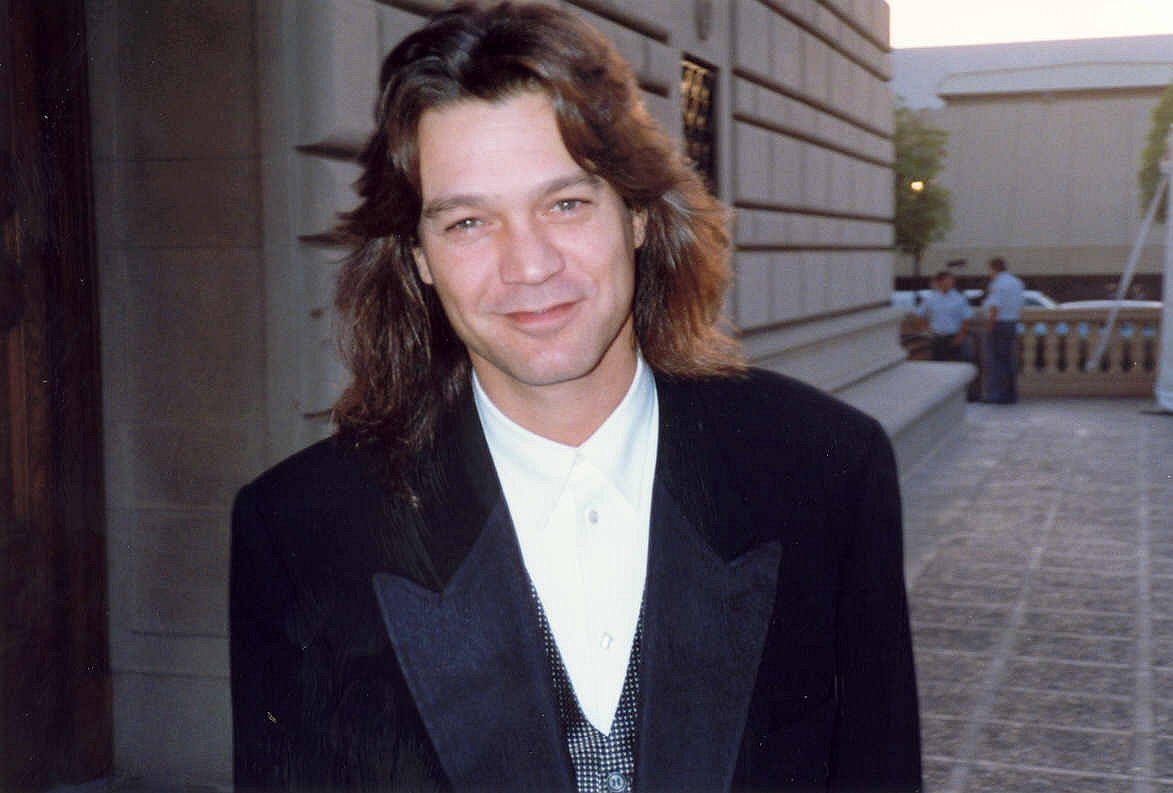
Clark stayed through the recording and touring cycle for OU812. By this point Eddie's rig carried more rack equipment and switching gear, built in collaboration with rig builder Bob Bradshaw. Clark has said he made every wire in that rack himself.
Eddie's tone was never coming out of one magic Marshall sitting behind him. It was a system: amplifiers, effects, speakers, cables, switching gear and guitars, all of which had to agree with each other. Clark was one of the people responsible for making that system behave.
1991–1993
The F.U.C.K. era, and out
Clark remained through For Unlawful Carnal Knowledge and the tour that followed: another large touring production, more time at 5150 Studio, and the Right Here, Right Now live era.
He left the organisation around 1993. The reason has not been documented. By then he had spent close to a decade working on one of the most demanding guitar setups in rock.
1988 – mid-1990s
Paisley Park and the Cloud guitars
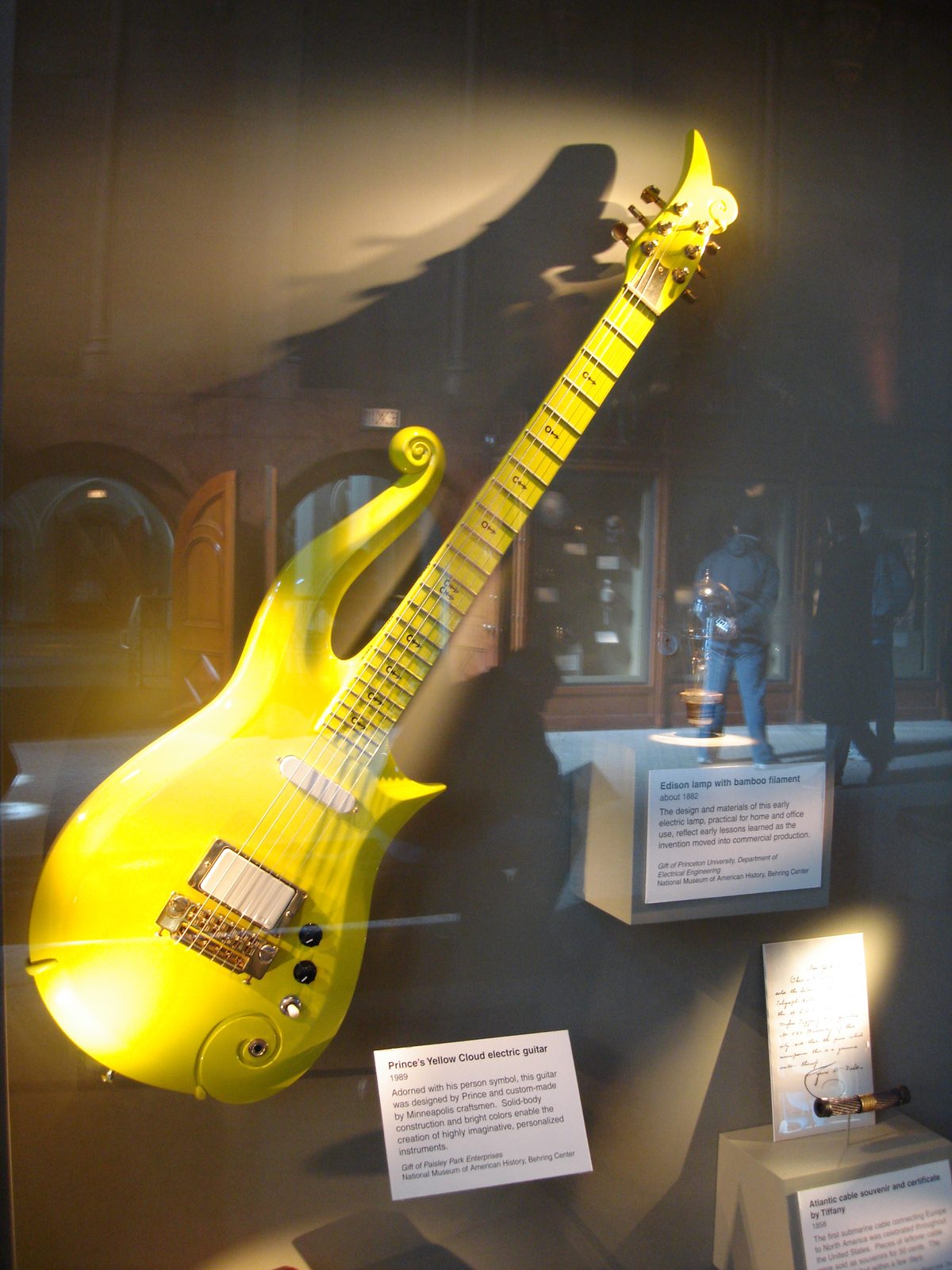
The Prince chapter is bigger than a single repair, and it starts earlier than the end of the Van Halen years. Clark is credited with creating and rigging several of Prince's Cloud guitars between 1988 and the mid-1990s, working alongside luthier Andy Beech. The original Cloud was designed and built by Dave Rusan in 1983 for Purple Rain; the instruments that followed were other people's work, and Clark was one of those people.
The clearest single documented piece is the Yellow Cloud. Its neck was broken in France in 1994 and Clark carried out the repair. He has also been described as Prince's head guitar technician for part of the 1990s.
Note the overlap. A 1988 start sits inside his Van Halen years, which ran to about 1993, so this was either building work taken on alongside the touring job, or the dates are softer than they look. Nothing available resolves it, and which tours or records he was around remains unclear.
1980s–2000s
The journeyman years
Clark's working history also lists Sammy Hagar, Journey, Heart, Poison, Starship, Faith Hill, Clint Black and Eric Martin. Some of it is on record rather than merely asserted. He is credited as production manager for the Eric Martin Band on Sucker For A Pretty Face (1983), as crew on Starship's Knee Deep In The Hoopla (1985), and as guitar tech on Heart's Brigade (1990).
The 1983 credit has him managing production two years before Eddie hired him, which fits the picture of someone who came up through the working end of touring rather than through a guitar shop.
The rest varies and is not fully documented: some touring, some studio work, some repair, some rig design.
That is normal for the position. The best techs move between short jobs, album sessions, rehearsals and full tours without ever collecting the kind of public credit musicians get. It is the reason a career like this is hard to reconstruct, and the reason almost nobody knows the name.
2010 onward
Kenny Chesney
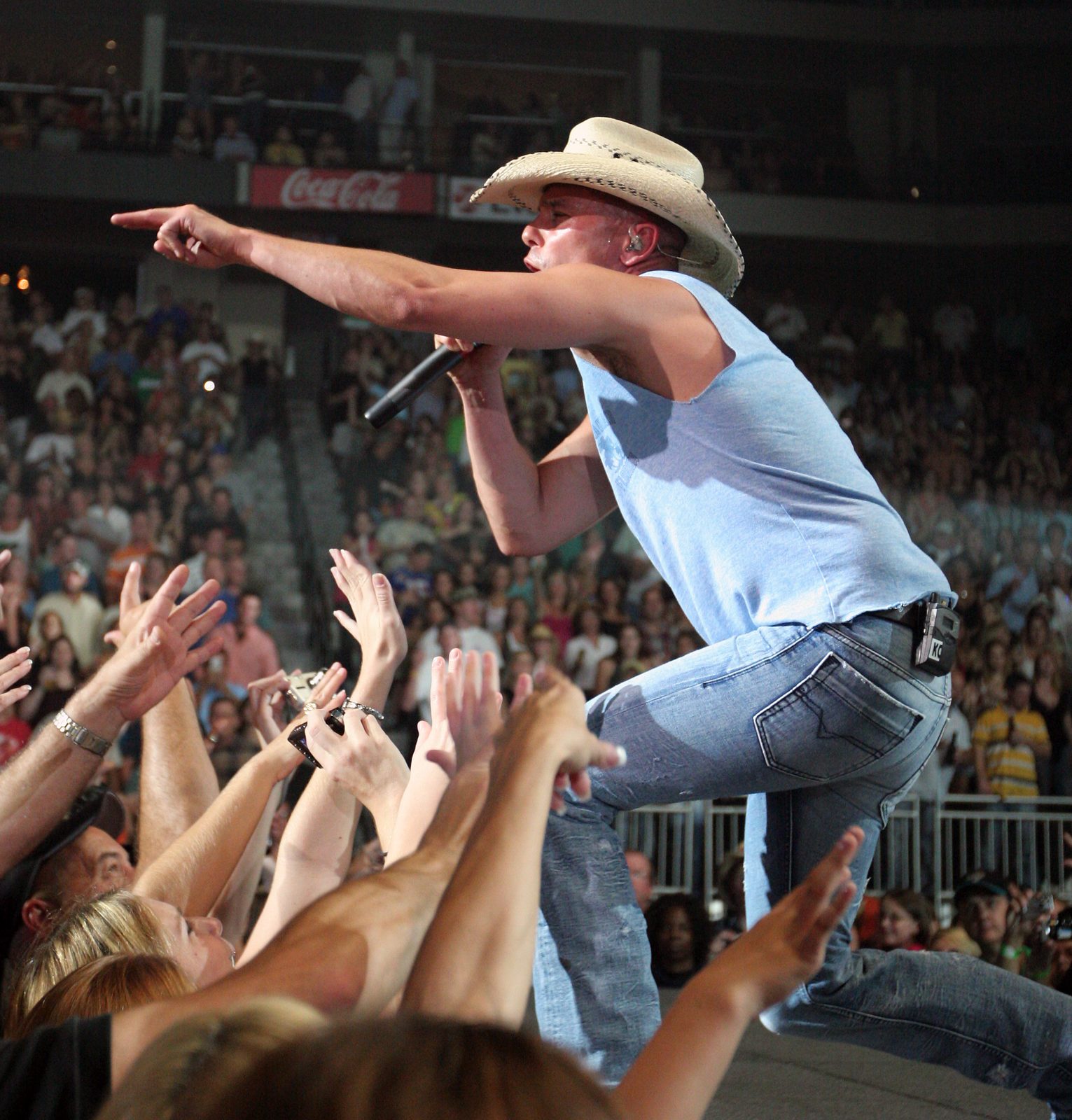
In August 2010 Clark began working with Kenny Chesney's touring organisation, doing the same work that had defined the whole career: servicing guitars and amplifiers, running the backline, keeping a large touring rig stage-ready.
A 2013 interview found him still deep in the technical side of it: speakers, cabinets, amplifier maintenance, touring equipment. Nearly four decades in, still doing the job.
2026
The collection comes out
In 2026 Clark put a large part of his personal collection up for auction through Backstage Auctions: the two striped Kramers he built for Eddie, several Marshall heads and cabinets, Prince material, tour passes, picks and crew memorabilia.
The sale closed on 9 August 2026. The 1986 guitar took a final bid of $170,000 across eleven bids; the 1987 guitar took $80,000 across six. Both are hammer figures, before any buyer's premium.
The sale is what put his name back into the guitar press. It is not what makes the career interesting.
The people whose names aren't on anything
Clark was inside 5150 while Eddie was rebuilding Van Halen around Sammy Hagar. He built two guitars Eddie kept and used. He wired the rack, worked on the Marshalls, chose and soldered in the speakers, and kept the entire arrangement running on the road.
Guitar history gets written around instruments and the people who played them, because those are the parts that are easy to see. The rest of it belongs to people who mostly go unrecorded: the wiring, the speaker choices, the repairs done at four in the afternoon so a show could happen at eight.
Nearly everyone knows Eddie Van Halen's guitars. Zeke Clark is one of the few people who knew how they actually worked.